
The show I would not have taken seriously, and what it actually gave me
By Chris Wilson
I did not watch Ted Lasso during burnout. I found it afterwards, in recovery, which is a distinction worth making because it changes what it was for. It was not the thing that got me out. It was the thing that kept me company once I was already out and had no idea what to do with myself.
That period is quieter than people expect. The crisis has passed, nobody is worried about you any more, and you are left in a house on a weekday with a version of yourself you do not recognise and no instructions.
What I was actually sceptical about
I would have told you, before, that I did not go in for that sort of thing. Relentlessly warm, open, hopeful people. My instinct was to find them a bit much.
Looking back, that had almost nothing to do with them.
You cannot take someone seriously for being kind to themselves when you are not doing it. The suspicion was not really about their optimism. It was about the gap between how they were treating themselves and how I was treating me, and it was easier to call it naive than to look at that directly.
That is the part I would want anyone reading this to hear, because it took me years. If a certain kind of person irritates you disproportionately, it is worth asking what they are doing that you are not letting yourself do or be.
It became something we did together
We watched it as a family, and that turned out to matter more than the content of any given episode.
It became a fixed thing in the week. Not therapy, not a project, not something with a goal attached. Just the four of us on a sofa at the same time, which is a surprisingly hard thing to organise and a surprisingly good thing to have when your own days have lost their shape.
I will be honest that the swearing landed differently with children in the room than the trailers had led me to expect. We got past it. It became part of the joke.
If you are in the flat, uncertain stretch after the worst of it, I would take a ritual over a plan every time. A plan needs energy you do not have and it can fail. A thing you do on a Tuesday with people you like cannot really fail.
The show is not what I had assumed
I will go further than I probably should here. It is the best thing on television about mental health, and I am not remotely interested in arguing about it.
The reason it works is that it is not actually about optimism. It is about a man who is generous with everyone except himself, and what that eventually costs him.
There is a moment in season two, in the episode called "Man City", where Ted tells his coaching staff that he had a panic attack during an earlier game. He had said nothing at the time. He kept coaching, kept doing the voice, kept being the reason everyone else felt better, and told nobody.
I recognised that more than I wanted to. Not the football. The bit where you are the one holding it together for other people and it does not occur to you that you are allowed to be a person who needs something.
And he is not the only one in that building doing it. The club owner is lonely while running the place. The captain hides everything behind being difficult. The kit man is invisible and knows it. Every one of them is managing something privately while assuming they are the only one.
Nothing in that room moves until somebody goes first. That is the actual mechanism of the show, and it is not a nice idea about kindness. It is a fairly cold observation about how silence works: it holds until one person breaks it, and then it cannot hold at all.
Negativity is not the same as clarity
The World Health Organization defines burn-out in the ICD-11 by three dimensions:
- "feelings of energy depletion or exhaustion"
- "increased mental distance from one's job, or feelings of negativism or cynicism"
- "reduced professional efficacy"
That second one is worth reading twice, because negativity does not present itself as a symptom. Exhaustion does. Negativity presents itself as accuracy. It feels like seeing clearly while everyone else is being sold something.
Two things for accuracy. The WHO says burn-out "refers specifically to phenomena in the occupational context and should not be applied to describe experiences in other areas of life", and that it "is not classified as a medical condition". This is a description of an occupational phenomenon, not a diagnosis, and reading a list is not the same as being assessed by someone qualified.
But it did give me language for something. The flatness I had been carrying was not a considered position I had arrived at. It was part of the depletion. And you cannot argue yourself out of that. What you can do is be around something warm often enough that it stops feeling foreign.
It also helps to hear it said by someone with no reason to be soft about it.
What it sounds like when someone says it out loud
In January 2024, Jürgen Klopp announced he would leave Liverpool at the end of the season, having won everything there was to win there. The reason he gave was not tactics or a better offer.
"I am, how can I say it, running out of energy."
And on why: "I know that I cannot do the job again and again and again and again."
The repetition in that second sentence is the thing. It is what depletion sounds like when someone is trying to say it honestly and the words run out before the feeling does.
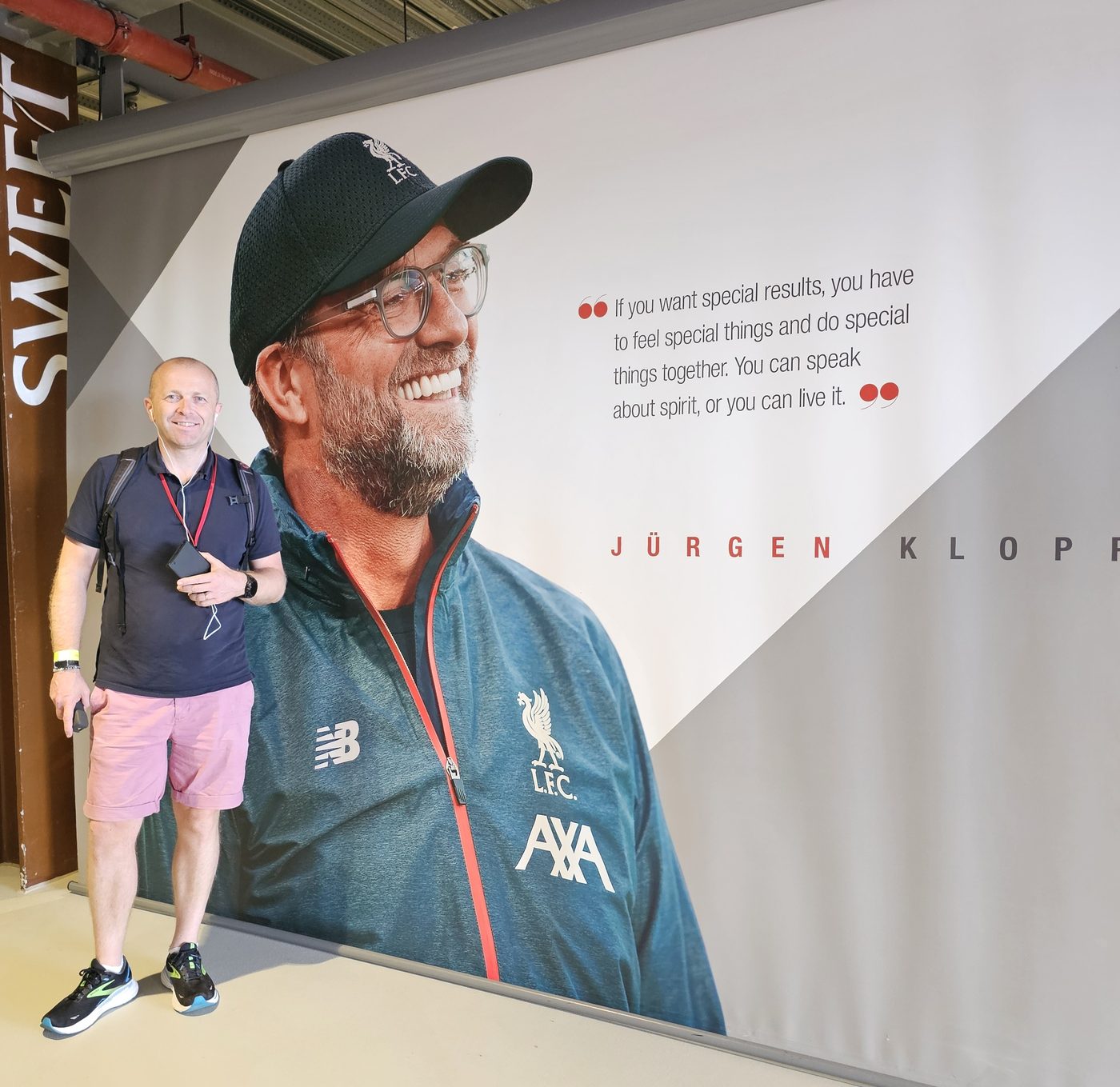
I am not putting a label on Klopp and it is not mine to put. He described running out of energy and made a decision about it. What struck me is that one of the most driven people in the game said it in public and nobody thought less of him.
The show had been making the same point for two seasons. It was harder to dismiss coming from a press conference.
Richmond

Ted brings Rebecca a pink box of biscuits every morning. It is not a grand gesture. It is the same small thing, repeated, until it turns into trust.
I did not think much of it watching, and then noticed we had accidentally built one of our own on a sofa on a weeknight.
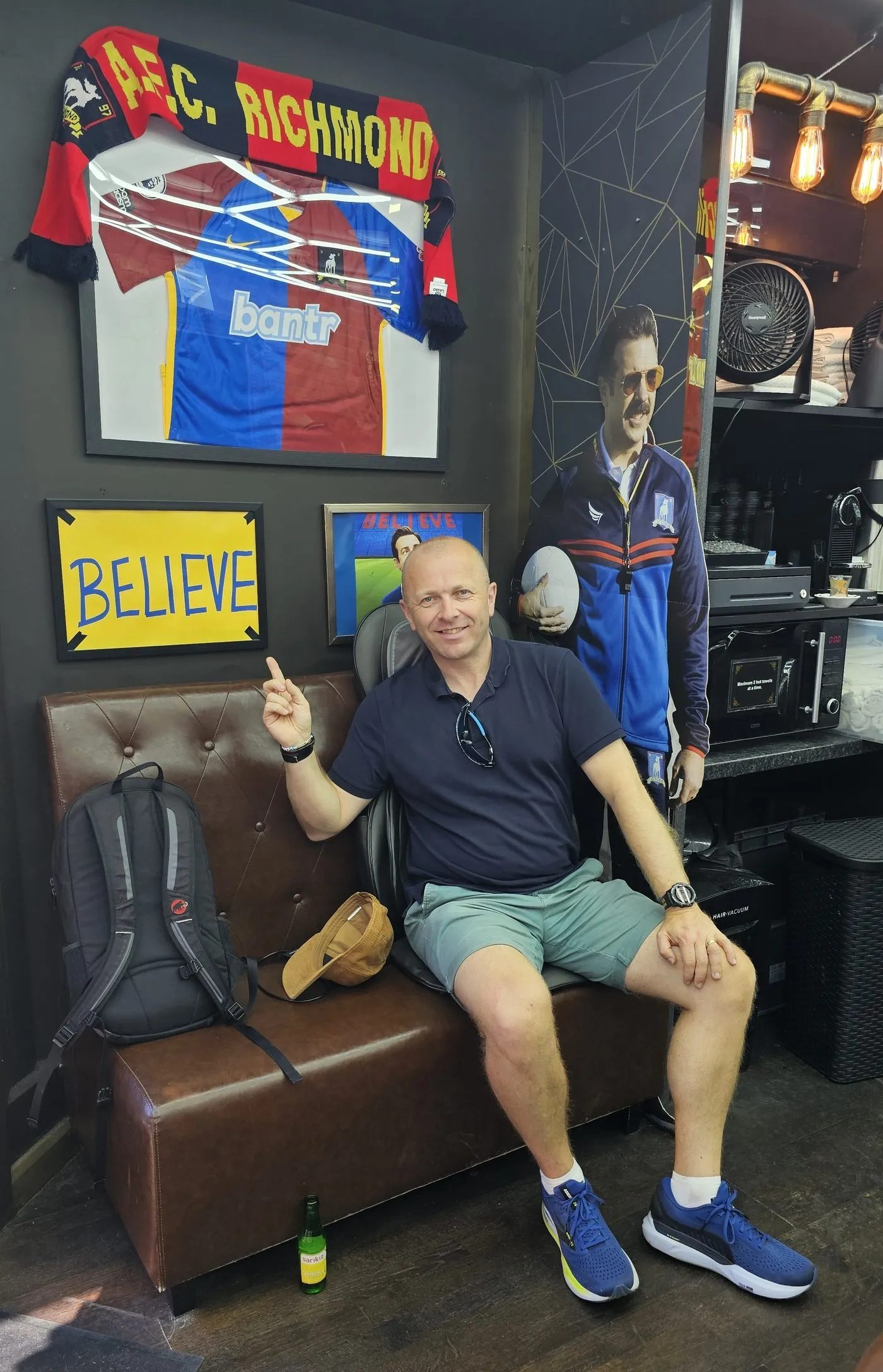
When we went to London last summer, we made the trip out to Richmond purely to do The Original Ted Lasso Tour. Not because we happened to be nearby. It was the reason for the day.
It is worth saying what that tour actually is, because it is not a coach operator with a licence. It was started by a local, it is a female-owned family business, and one of the guides first came along as a guest and liked it enough to end up working there. Around two and a half hours, twenty six locations, starting outside Richmond station.
Our guide, Emmy, was excellent. She knew the streets, she knew the show, and she understood that most of the people on that walk were not there for trivia.
To be clear about it: I have no affiliation with the tour, there is no commission, and nothing was exchanged for this mention. I am recommending it because she was good at her job.

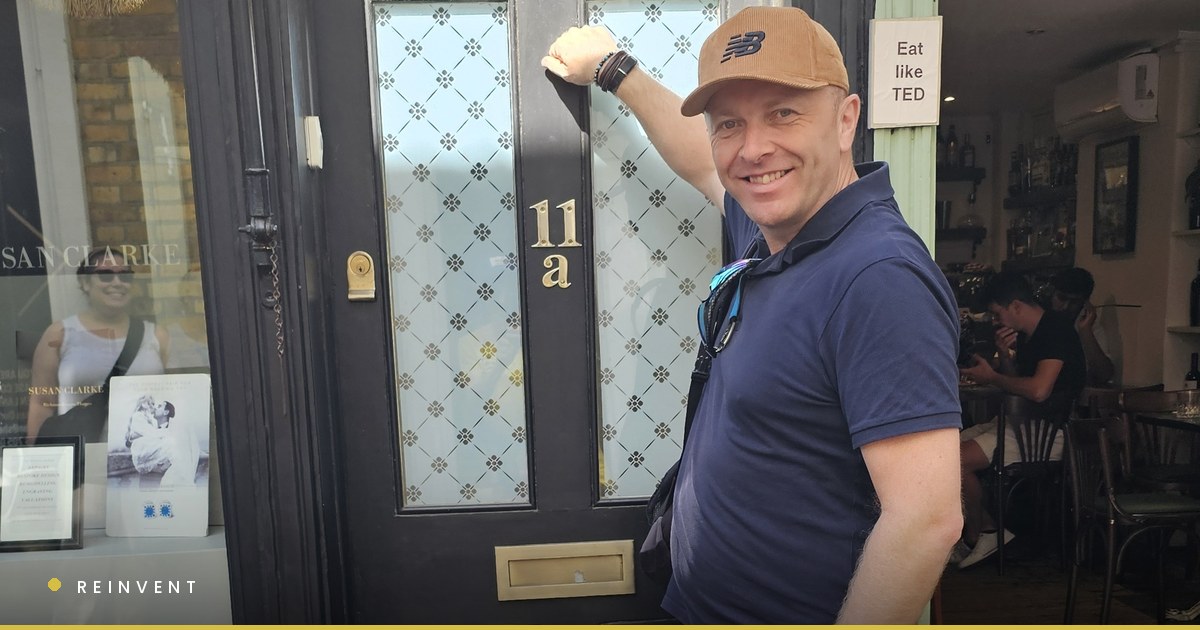
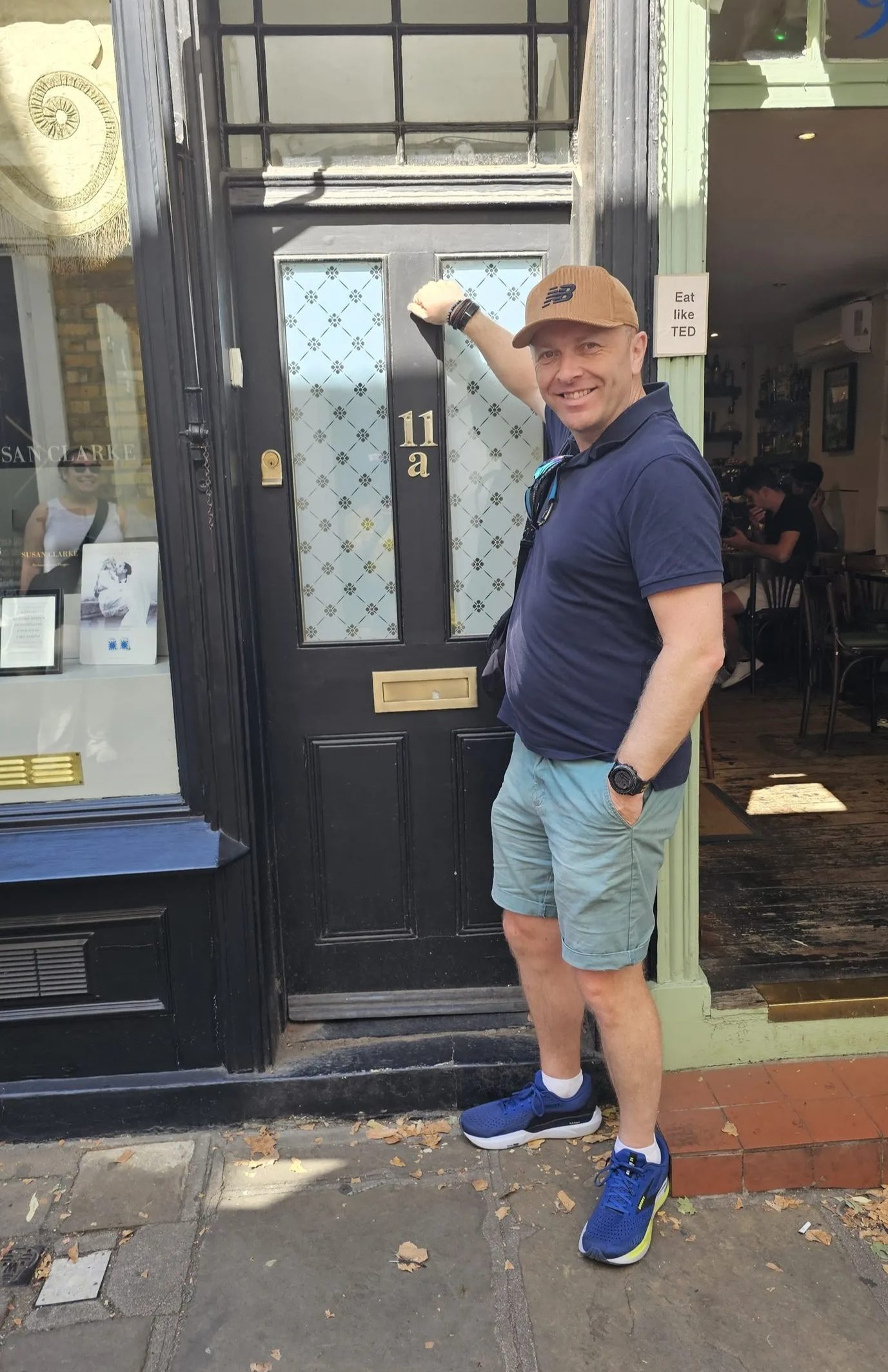
One of the stops is the bench where Ted and Coach Beard sit and talk. Not a set, an actual bench, in an actual park, where people eat lunch. Standing at it, and at the door at 11a, is a slightly ridiculous thing for a grown man to do and I would recommend it. There is something in physically going to where a thing you needed came from.

What actually changed
Not optimism. I did not become an optimist and I would not trust myself in the role.
What changed is smaller and more useful than that. I had always treated optimism as a personality type, something you either were or were not, and I clearly was not. What I had not considered is that it might be a practice. Something you do on a particular Tuesday, badly, without believing it, and then again the following Tuesday.
That distinction matters when you are depleted, because becoming a different person is not available to you. Doing one thing differently is. You do not have to feel hopeful to act as though something might work.
The other change is that I stopped treating how bleak I felt as information about the world, and started treating it as information about my state. Those are different things, and telling them apart is most of the work.
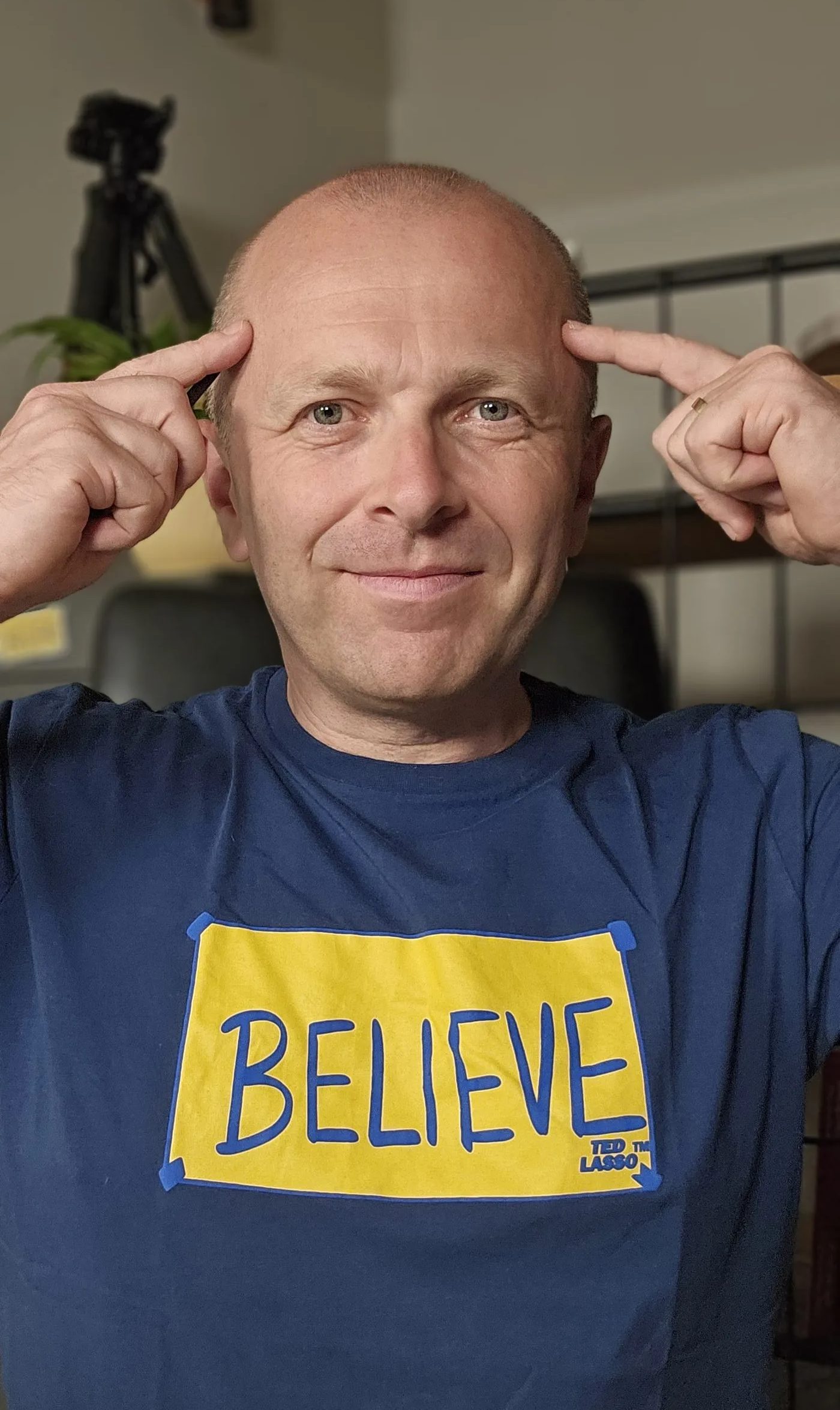
Season four is airing now, which is what finally made me write this down. I am watching it in a very different condition from the one I was in when I started.
The people who went first
Here is the thing I did not expect about all of this.
The people who went first for me had no idea they were doing it. A fictional coach, written by people I will never meet, saying out loud in a locker room that he had been struggling. A football manager at a press conference, talking to journalists, admitting he had run out of energy. Neither of them was speaking to me. Both of them said something plainly that I had not been able to say quietly.
You do not get to choose who hears you, or whether it lands, or when. Which is a fairly good argument for saying the thing anyway.
I have had enough of my own story handed back to me by other people since then to know that none of it was ever unusual. The isolation was never accurate. It only felt that way because nobody in the room was going first, and everyone in the room was waiting.
If you are in that flat stretch after the worst of it, there is nothing to decide today. But if there is a person or a programme or a thing that irritates you more than it should, that reaction is worth a second look. Mine was pointing at something I was not giving myself.
Where I'm At is based on lived experience, reflection, and educational support. It is not therapy, counselling, crisis support, or professional advice. Please consult a qualified professional for individual medical, psychological, legal, financial, employment, or specialist support where relevant.
The REINVENT phase in Where I'm At Community is for this part, where the question stops being about getting through it and starts being about who you are afterwards. It is currently free to join, and you are welcome to read for as long as you like before saying anything.
Sources
- World Health Organization (2019, ICD-11). Burn-out an "occupational phenomenon": International Classification of Diseases. https://www.who.int/news/item/28-05-2019-burn-out-an-occupational-phenomenon-international-classification-of-diseases
- Premier League (2024). Klopp: I am running out of energy. Announcement of 26 January 2024. https://www.premierleague.com/en/news/3868050