
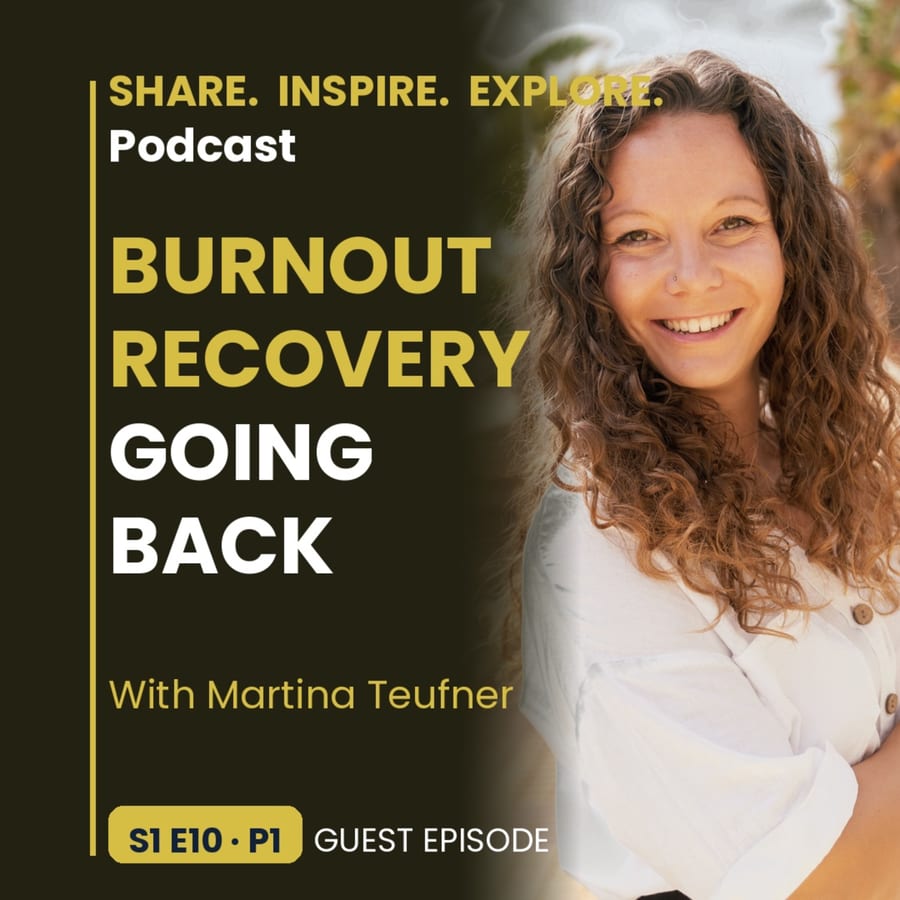
HR's Role in Supporting Burnout Recovery, Part 1 — Martina Teufner
Prefer to watch? This episode is on YouTube and the show is on Spotify.
About this episode
Burnout recovery does not end when someone returns to work. In a lot of ways that is where the hardest part starts.
Chris Wilson and HR consultant Martina Teufner talk about the emotional reality of walking back into the workplace after burnout: the fears people carry in with them and rarely say aloud, and the distance between a reintegration policy and whether anyone trusts it.
Martina is direct about where HR can genuinely help and where a process on paper does nothing at all.
What returning after burnout actually feels like from the inside The real risk people weigh up before speaking honestly at work Why reintegration processes fail, and where HR can be a bridge instead
Season 1, Episode 10
Part 2 continues with recovery culture, HR's own boundaries, and what meaningful change looks like.
Connect with Martina Teufner: https://www.linkedin.com/in/martina-teufner/
Share. Inspire. Explore. is the podcast from Where I'm At, honest conversations on burnout, career change, and what comes next for working professionals.
Join the Where I'm At Community, free to join: https://community.whereimatcommunity.com/store/product/membership Website: https://www.whereimatcommunity.com
Where I'm At is based on lived experience, reflection, and educational support. It is not therapy, counselling, crisis support, or professional advice. Please consult a qualified professional for individual medical, psychological, legal, financial, employment, or specialist support where relevant.
Read the full transcript3,602 words
Automatically transcribed, so it may contain errors and does not identify who is speaking. It follows the conversation in order.
Welcome to the Share, Inspire and Explore podcast, the voice of the where I'm at burnout community. I'm Chris Wilson. And after my own journey through burnout and depression, I'm here to share real stories, inspire personal transformation and explore the path from burnout to balance. Each episode brings honest conversations with burnout survivors, mental health experts and mindset coaches, offering lessons, strategies and hope. Whether you're recovering, curious or searching for motivation, this is your space to grow. Let's dive into today's episode.
Before we start, please note, I'm not a medical or mental health professional. What I share here comes from my own experience with burnout and recovery and is intended for informational purposes only.
Welcome back to the Share, Inspire and Explore podcast. Today, we continue our HR and burnout series by focusing on burnout recovery in the workplace. What happens when an employee returns after burnout related leave? How does HR balance business needs while ensuring a smooth reintegration?
Joining us again is Martina Teufner, an experienced HR consultant, business coach, founder of Resource Minds Consulting, founder of HR Business Friends and awarded one of LinkedIn top HR voices in 2024, who helps companies create healthier work environments. Welcome back, Martina. How are you doing? Hi. Hi, Chris. Thank you for having me back. I'm good. How are you?
I'm good. It's raining here in Vienna and I know in Tenerife, it's not raining, I'm sure. No, it's sunny. I can report. Sure. Enjoy. Enjoy. So, can you briefly share your experience in handling burnout recovery cases and what companies get right and wrong about the process?
So, I think the most or the biggest thing that can go wrong or right is communication in this case. Because people tend to not talk about burnout. They tend to not ask questions as they think it might stigmatize the person or even burnout patients. They don't talk about it. So, and I think that's the biggest mistake that can happen. Because if you treat it like a big secret and nobody's allowed to talk about it, people will talk about it behind your back and it will be not an open discussion. So, what I think the best step is to talk about it openly to ask how are you doing and having a real interest in the person.
But the thing is, it's a bit tricky, especially in Austria, because we have the rules and regulations and by law, as a company, as an employer, you're not allowed to ask why your employee is on sick leave. So, you just get the information, somebody's on sick leave. And you don't know why, you don't know if they have broken their leg or if they have burnout. So, and you're not allowed to ask them. So, this makes it a bit difficult. And that's why companies and people tend to not talk about it. And I think that's the wrong approach. I mean, I would never go to an employee and ask, "Hey, why are you on sick leave? What do you have?" Like an interrogation.
But asking a sincere, "How are you doing? Is there anything we can help?" would be a good starting point, I think. Yeah, that's such a shame because not knowing the problem or root cause, you know, of the sick leave in the first place means the risk the employee getting back to the right path or indeed a new one more suitable is lower, you know, because the solution is not tailored for both parties. Yeah. Absolutely. Yeah. Yeah. When an employee returns from burnout related leave, what should HR's first steps be? So, let's imagine in an ideal world, HR knows that someone was on sick leave because of burnout, then they could do something. Mostly, they just don't know about it, or they just heard rumors, or they're not sure they suspected it. But in an ideal world, we would maybe know about it and could, we could take steps. And also here, it's a lot about communication, because I think every
burnout case is very individual and everyone will need some kind of individualization. So you cannot have a standardized process and just put it on the people and say, okay, here you go. So I think asking the employee, Hey, how are you doing? And what do you need from us as a company? Where do you see potential problems coming up when you come back? How can we support you? I think that's the first role HR would take on to ask this question. So what do you need? How can we support you? Because often line managers, I would assume a line manager should ask the same questions, but they're often overwhelmed, and then they don't know what to do. And so HR could be a more, let's say neutral or supportive role in
in this process. And, and just talk to them and ask them what they need, and then see, okay, what can we really offer? Because sometimes the needs of employees might might, might, there might be a problem to fulfill them. But then you also have to talk about it. So also here communication is key, asking the people about their needs, I would say. So it sounds like it's a blank, a blanket approach to all long term absences. It's stark contrast to the first day welcome from HR. But, you know, I get why that is. I'm sure the employee just wants to come back under the radar, and slowly get into the work. But as you say, HR don't know the reason and are not allowed to even ask here in Austria. So it's a really strange situation.
Yes, that's true. It's, it's strange for both parties, I would say. So yes, it's a bit weird, I think. What are the most common mistakes or oversights companies make when bringing back employees recovering from burnout? So I think there are a lot of mistakes because they often don't know that they are bringing someone back from burnout. So the thing is, if you strictly stick to the rules you have or to the law, you would not ask and you would not know and then people are coming back from sick leave, nobody asks them and then you're putting the same pressure on them like you put before. And this happens all the time, I think, because people don't ask.
They don't talk about it and then these mistakes happen. So the biggest mistake from my perspective is to not talk openly about these topics. And I don't mean by that, ask people who go on sick leave all the time, what do you have exactly and show me your doctor's certificate, whatever you have. But opening the communication about burnout in general, having managers talk about it, being open, having conversations with employees who you think feel a lot of pressure. So if you have these conversations before someone has a burnout, it also helps in the reintegration because then they can talk more openly about their needs, they can tell you actually, hey, dear HR business partner, I was on sick leave because I had a burnout, and now I need A, B and C for coming back.
So this would help being very open. And I really think that's the biggest mistake, not talking about it, keeping it a big secret, because also the colleagues don't understand why is this person not part time? Why is this person not the project lead again? Why is this person in a different department? Why I'm not allowed to call them after 6pm? Why don't we have our Friday 7am meetings with this person? Why is this happening? So you need some kind of explanation for that because people will ask these questions. And if you never talk about it, this is the biggest mistake you can you can make because if you never talk about it, how to explain all of these things and how to deal with them.
So I think really, this is my strong belief, you should talk open and transparent about these things before they happen, when they happen and after they happen, because then everyone feels comfortable mentioning it, mentioning, okay, I felt a lot of pressure, I was really sick, I felt really unwell, but now I'm back and I'm trying to come back. Please help me with this and that. So I think really, the biggest mistake is to not talk about it. And the best thing to do is starting the conversation. Totally. But I mean, it's, it depends on the individual situation and let's say the relationship with colleagues or that manager or the environment as a whole. But yeah, I guess, you know yourself, how much you can share.
So let's say, right? Absolutely. Yes. And maybe to add on this, this also depends on the company culture, right? In some companies, it might be enough to say, okay, I had a burnout, I don't want to talk about it. And in other cultures, people will start to ask questions. And also here, you have to be maybe very sensitive to that and also give colleagues and line managers, some kind of guidelines. So, hey, there is someone coming back. This person was on a long sick leave. People, please keep in mind, do not ask them. If they want to tell you, they will tell you themselves. So you could have these rules in place beforehand to have a secure environment to come back to without having to answer all these questions.
Just a quick reminder, everything discussed here is from personal and workplace experience. If you're struggling, please seek guidance from qualified professionals. returns, gradual reintegration. Some companies offer phase returns where employees, you know, slowly ease back into the roles. From your perspective, how effective is this approach and what does it typically look like? So I think this is again, very individual, but I think it's a very good thing to do because if you experience a burnout, I assume, you know, you cannot just come back and be there like you were before because it does something to your energy. It does something to your life. Everything changes. So you cannot just come back after, let's say, a year or half a year and be the same person, do the same job the same way you did it before,
because if you could, you would again go into this spiral of burnout, which is not healthy, right? So this phase return helps you as a recovering employee from burnout to try, what can I do? What am I able to do? And where do I need to save some energy? And it also helps the company to see, okay, how can we support this employee? And how can we help this employee to get back on track? Because in the end, the company wants you to do your work, right? So that's the goal overall, but also employees normally tend to wanting to work, right? So I think a phase return is very good. And also in Austria, we even have some kind of funding from the public. I'm not expert on this, but you can get some funding
if you have a long-term sick leave, and you come back in part time, you can get some funding from the state for the company. And so it's cheaper, basically, to take these employees back, which is an incentive for the company to support this process. And I think in such a phase return, you asked how it could look like. I think both parties need to be very flexible, because it might be that the employee thinks, okay, I can come back for, let's say, 30 hours a week. And after the first week, they are super tired. And they say, okay, I cannot take it, I need to step back a bit. And then you need to have this
flexibility to say, okay, let's try 20 hours, or let's try 15 or 25, whatever. So I think there is a phase of maybe one or two months, where you really both sides have to try out what works and what doesn't work. And this might also include some conversations about, is the role the right one? Is the right department? Is it the right line manager? Is it the right team? Whatever the discussion is, I think you should have it. And also, you know, give yourself the possibility to do a bit of trial and error. And I think if you have that openness, this could work very, very well. And I think it's, it's the better step, or it's better than just coming back full time and doing the same all over again. I think
that it's not really working. That's, it's hugely important. On my first return, it wasn't an option presented to me. And I really felt it in the first week. And by the time like a month had passed, it was such a struggle.
This flexibility you mentioned, this, this, this would have been perfect. And because it is really like starting again, I would say to the viewers out there, push as hard as you can for this phase return. You know, in some countries, I think it's your right. I actually think I learned it was my right to be offered this, this phased return and part-time. But hey, ho, we are where we are.
Burnout is often caused by overwork and unrealistic expectations. Martina, how can HR help adjust workloads for returning employees without disrupting business operations? So, honestly, this is a very hard question, because HR cannot adjust because normally, you know, HR is in contact with all the colleagues and all the departments, but we don't know all the details of every role. So, it's quite hard to even say something about the real workload in a position. And also, the workload is for every person, they just experience it differently. You know, some people, they love to be in the office until 10pm. And other people would hate it, which I totally understand, but it's, we're all different. So, I think HR cannot really help in
the adjustment of workloads because we don't have enough understanding of all the specific roles and also the individuals. But what we can do is open the discussion because sometimes, you know, line managers, they would know about the pressure in a role. They would know way more than an HR person about the role and how the workload could be maybe organized differently. So, but they don't think about it, you know, because they also don't know that their employee was in burnout or they think, oh, it's not that much pressure. I did the same. Maybe you heard that that the line manager, oh, I did the same job and I dealt with it, deal with it. So, they don't understand it. And what HR can do is ask the right questions and raise the awareness.
If you know somebody's coming back from sick leave, from a long-term sick leave, and you know it was burnout, or even if you don't know it was burnout, I think the role of HR could be go to the leader and ask them, hey, we have somebody coming back from a long sick leave. How are you adjusting the workload? Did you discuss it? Did you think about it? Do you know what to do? Did you discuss with your employee maybe? Did you ask them what they need, what they think? So, I really think it's a leadership topic and HR can like trigger these thoughts in the manager.
And HR can also tell them, okay, please be sure to make adjustments. Please be sure to not put too much pressure. On the other hand, HR can, even if they're not allowed to ask what you have or why you're on sick leave, they can give you a call and say, hey, I know you're coming back next week. Is there anything we can do to support you? Is there anything we should talk about beforehand? So, also open up this conversation because then maybe the person, you know, you know yourself best. I know myself best and we would maybe know what we need if somebody will ask us or we could at least think about it. So,
I think HR can open up the discussion. They can open up leaders to think about it and they can show employees, hey, you can tell us what you need and we will try to make you as comfortable as possible at work. And I think that would rather be the role than just adjusting workloads because this is something HR cannot offer from my perspective.
Yeah. It's, it's interesting, you know, when, uh, often it's the employee putting the company's needs first out of their own that brings them into that situation. But then when they return, it shifts the other way. Based on what you say, it's, if only it wasn't either or in many cases,
uh, we'd be better at this consistent balance, but I know this is easier said than done, right? To put into practice. Yes. Yes, absolutely. What, what kind of flexibility should be offered during the recovery period? You've mentioned already these adjusted hours, remote work options. Is there anything else?
No, I think flexibility in general. So about remote work, about adjusted hours, but also flexibility in dealing with the person and giving understanding because it's a new situation for most of the people. So you normally don't deal with the people who just recovered from burnout every day. So it's new. You have to be flexible also in your mind and the person knows best. So I think this viewpoint helps a lot. So you have to ask them, what do you need? And you have to be flexible enough to ask this like every other day, maybe in the beginning every day, um, to adjust together. Right? So I would really try to be as flexible as possible. Of course, there is, there are some laws you cannot
change, like working times every day, you know, there, but still as a company, you have some kind of flexibility to still do this. And I think this is a lot about also flexibility in your mindset and willingness to, to help this person to reintegrate because in the end, that's what we all want. The person wants to work and the company wants that this person works for them and adds value. And this will only work if you do it together. And if you have the flexibility for a couple of weeks or a month, even, um, to support this process, this would be very important. So flexibility of working hours of workplace, but also flexibility in your mind to find solutions. I would say.
Totally. I have, uh, just returned actually to work after 13 months off. Uh, I'm six weeks there now in the new job. And my main worry was what's my new baseline of effectiveness, so to say. So I love what you said. So as long as there's this understanding and regular check-ins without feeling judged, uh, this is a great strategy for both sides, right? Absolutely. Yes. And congrats on being back to work. Thank you. Thank you. I'm very happy. I'm very happy.
We've covered some deeply important ground today. Everything from the emotional weight of returning to work after burnout to why HR needs more than policies to truly support recovery. But we're just getting started. In part two, Martina and I dig deeper into how HR can advocate for individuals without compromising their own wellbeing,
what integration should really look like and the powerful role of peer support and community in recovery. So if you find today's conversation helpful, don't miss part two. We'll see you there.
This podcast is for informational purposes only and reflects personal experiences. It is not a substitute for professional health, legal or employment advice. That's it for today on the share, inspire and explore podcast. I hope something resonated with you, a moment of clarity, encouragement, but just a reminder that you're not alone. If you find this helpful, share it with someone who might need it, hit follow or subscribe to join us for future episodes.
If you're new here, please check the link in the description to join the community. Burnout is tough, but it's also a chance to heal and rediscover what matters. Thanks for being a part of this journey. And until next time, take care, keep exploring what's possible.
I'm Chris Wilson and that's where I'm at feeling lost in the aftermath of burnout. You're not alone. Where I'm at is a new community created for those in recovery, those at risk and those supporting others. It will be a safe, evolving space to recognize, reset and reinvent with live sessions, peer support, expert Q and A's, and more.
It will be free to join in the beginning. And while not everything will be there from day one, this will be a community which is built by us and for us.
Click the link in the description to join and shape what's next. My name is Chris Wilson and that's where I'm at. Thank you.