
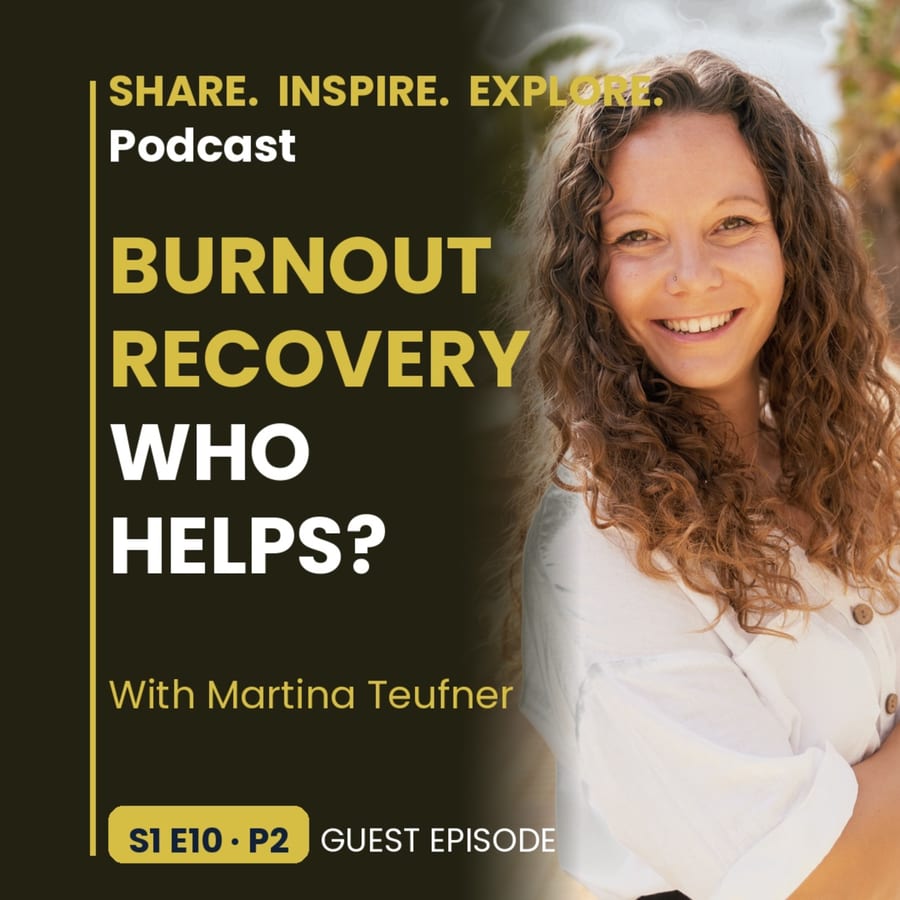
HR's Role in Supporting Burnout Recovery, Part 2 — Martina Teufner
Prefer to watch? This episode is on YouTube and the show is on Spotify.
About this episode
Supporting someone through burnout recovery costs the person doing the supporting, and HR is rarely given anywhere to put that.
In the second half, Chris Wilson and HR consultant Martina Teufner get into what real recovery support looks like once you accept the limits of the function. Where HR has to hold its own boundaries, what employees actually need before they feel safe again, and why trust and transparency do more than any return to work checklist.
They also talk about peer support, and what a workplace built around people rather than process might look like.
Supporting recovery without burning out the people doing the supporting What makes reintegration feel safe rather than merely permitted Peer support at work, and why it reaches places policy cannot
Season 1, Episode 10
Part 1 covers the emotional impact of burnout and what recovery demands.
Connect with Martina Teufner: https://www.linkedin.com/in/martina-teufner/
Share. Inspire. Explore. is the podcast from Where I'm At, honest conversations on burnout, career change, and what comes next for working professionals.
Join the Where I'm At Community, free to join: https://community.whereimatcommunity.com/store/product/membership Website: https://www.whereimatcommunity.com
Where I'm At is based on lived experience, reflection, and educational support. It is not therapy, counselling, crisis support, or professional advice. Please consult a qualified professional for individual medical, psychological, legal, financial, employment, or specialist support where relevant.
Read the full transcript4,320 words
Automatically transcribed, so it may contain errors and does not identify who is speaking. It follows the conversation in order.
Welcome back to the Share, Inspire and Explore podcast. This is part two of our conversation on HR's role in supporting burnout recovery with the brilliant Martina Teufner. If you haven't heard part one yet, I highly recommend going back. It lays the foundation on what returning from burnout feels like, the hidden fears employees face, and why most reintegration efforts miss the mark. In this second part, we explore the how. How HR can protect its own boundaries while supporting others, how to foster real cultural shifts, and what practical reintegration might look like for people navigating burnout recovery. Let's get into it.
Before we start, please note I'm not a medical or mental health professional. What I share here comes from my own experience with burnout and recovery, and is intended for informational purposes only. Martina, how should HR encourage open conversations about burnout without employees fearing repercussions?
So, actually, I'm not an expert on this specific topic, but I think most companies should have some point of contact within the company where people could give some anonymous information on stuff like burnout, but also other things. So, I think there is even a legal obligation for companies to have this point of contact. I think it's if you have more than 20 employees or something. So, and this point of contact would be a person that is trustworthy and that you could talk to and who is trained to deal with this kind of stuff. This could be in the HR department, but doesn't have to. So, that's one thing I think HR should make sure that this point of contact is there and is a possibility for employees. Because especially when it comes to
things like burnout, people are afraid to talk about it. Because also in the general society, we don't talk a lot about the things, So, you're not used to it. And it's way easier when you can do it anonymously. And you can just start and put your toes into the cold water and see if it works out or not. The second thing is, I think HR should start to talk openly and transparently about the topic. Because so you can lead by example, basically. If you make it a topic, if you talk about it, if you offer trainings, if you offer leadership coaching on how to deal with burnout, if you go talk to people where you see they have a lot of pressure and you just ask them, "Hey, how are you doing?
Do you need anything?" Just to raise awareness, I see that you're under a lot of pressure. So, teaching this to the leaders, because they see first when their employees are struggling, or at least they should. So, HR should make it a topic, because then it's easier for employees to raise their hand and say, "Hey, I have an issue here." Or, "I see my colleague is struggling. I don't know how to help." But if nobody ever talks about it, then it's easier for employees to raise their their hands and raise awareness. So, I think that's the way HR can open up the communication channel. First of all, give the opportunity to talk about it anonymously. And second, talk about it a lot to raise awareness.
This makes it easier for people to also come to you and talk to you about it. And then you can see how you can help or not help, maybe. But still, you can open up the conversation within the company. Totally. I mean, using the reintegration piece and raising awareness through how a company helps people come back and reintegrate and get back on path or on a new path, as you say, it's so powerful. I have the feeling in my new company that this is the case. So, it made me feel very, I got the warm feeling, so to say. That's awesome. Maybe also sharing internal success stories, of course, if the employees agree or anonymously, however, but sharing these stories would be an awesome sign, I think.
Absolutely. Absolutely. You mentioned the managers. A manager's approach can make or break a returning employees recovery. So how can HR ensure that managers provide the right level of support? Yes, ensuring is very hard. So I would say open communication, a lot of training and hope, a lot of hope, because managers play a key role in employees returning, because they are your main point of contact, you will see them, probably every day, you will get tasks from them. So they need to be a big part in the reintegration, right? Yeah. And first of all, they should know that they are a big part of your reintegration, right? So they should be aware of that. And I see the role of HR to make them aware of that, to know what is their role? What should they do? Because they might be overwhelmed, but they might also just don't think about it. So HR can help and tell them, hey, you have someone coming back from a sick leave.
They have a burnout, you have to adjust. So we can raise awareness with the leadership team. That's one thing. The second thing is, train them, have workshops, have experts come in, how to deal with it, because it's very hard. You know, there are no psychologists, so they maybe don't know what to say, they may be insecure. And so help them with that. Tell them, okay, how can you deal with that? Because maybe sometimes they just need this reassurance, you are allowed to ask your employee how they're feeling, you are allowed to ask them every day. And maybe in the first two weeks, it's a good idea to have a one on one meeting every day before the employee leaves to go home, like 10 minutes, just to check in. How are you doing? How was your day? Do we need to adjust anything tomorrow?
So just teaching this to them and training them to do this and to have these conversations would help a lot. And I think communication, so making them aware of it and training them how to deal with it is what HR can do. And then we have to hope that they implemented because managers are also people, they will make mistakes, and there will be great managers, and there will be very bad managers. And there will be great people who are bad managers, and there will be very bad people who seem to be good managers, but probably won't be good managers. So and as HR, you can, what should you do if someone is a bad manager? So you cannot just go there and say, I fire you because you don't have the authority to do so. So that's that's the hope part, that they understand that you have communicated openly transparently.
And often enough, and that you have trained them well. So they understood how important it is for them for the company for the employee to have a good reintegration process. And yeah, I think that's what HR can do here. You mentioned the different management styles there. It's difficult if the manager, you know, or colleague in a team was a big factor on the employee going into burnout in the first place. But I guess the employee can go to HR with their concerns in such cases, right, Martina? Yeah, absolutely. Yes. And I think this is also the right way to do because it doesn't make any sense to come back into a team where you already know there is a manager, there is a colleague who brings out this in you, who puts this pressure on you, and then you have to find a solution together. And this might not be easy, to be honest.
But of course, I would never recommend if you know that, for example, let's say your line manager played a big part in your burnout journey, and you're afraid to come back into his team. Then please talk before to HR and figure out the solution. Maybe there is the opportunity to work in another team or have a different line manager or learn something new and work in a completely new area to avoid this confrontation and to avoid this situation. So, yes, please. Sound advice. Sound advice. Just a quick reminder, everything discussed here is from personal and workplace experience. If you're struggling, please seek guidance from qualified professionals. It's not just the managers. Co-workers, we've talked about it already. They may not always understand burnout recovery and maybe assume the returning employees getting special treatment.
How can HR manage these dynamics and avoid stigma. Oh, it's really hard. It's really hard because what I said before, I said it so often today, the open communication is not always easy in this case, you won't go as a job, you won't go around the company and say, Oh, Hey, this person is coming back from burnout, because you would not do that. Right. And you're not allowed to do it in the end. So you cannot do this. So from my perspective, the first thing, The first thing is talk to the concerned person. So the employee who is recovering, who is coming back, talk to them and ask them, Hey, do you want your colleagues to know?
What do you want your colleagues to know? Do you want to do the communication yourself or should we take over? How can we support that? Because then you get an image of where you can support. And from my experience, the less you tell people, the more they will talk about it, the more they will talk behind your back and the more assumptions they will make and the harder it gets basically. So I would personally always go with a transparent approach, but very clear with also boundaries. So that's why it's important to talk to the employee first, because I think in the end, it makes sense to tell the colleagues, okay, you have a colleague who wasn't sickly for a longer period of time.
I mean, they noticed, right, they know that you were away. So let's give them a reason. This person had burnout. There was a lot of pressure. This person is now coming back. Please help us reintegrate this person and then tell them what to do. Some people will say, okay, I'm happy to talk about it. So my colleagues should ask me if they have questions about burnout, which I would really appreciate because then they would learn something, right? But not everyone wants to be as open with this. So you could also say, okay, we have some rules. This person is coming back. We don't want to put a lot of pressure on them. Please do not ask them.
Please keep a bit of distance. Please do not put more pressure. Only ask them, really have guidelines. Ask them how they are doing. And if they don't want to tell you, leave them. So give them some guidelines because in normal cases, your colleagues, will mean very good. They are interested. They want you to come back. Right? And if you give them some clear guidelines, which you worked out together with the colleague who's coming back, it might help them. And of course, if you have colleagues who don't mean good, you hopefully know already and we can talk about it beforehand. But this also might happen. There might be a person who still asks these questions, who still talks behind your back, who still puts pressure on the on the person coming back.
And there you really have to set boundaries idly before and tell them, okay, if you don't help with the reintegration, if you work against it, it will have consequences. And if you put that out there quite clear, I would assume it works out still there are bullies out there, then you have to deal with the bully. And this would then again be something the line manager and HR together would tackle. But I would hope if you have clear guidelines before and you tell them as much as you can, but not too much, it normally should work out. And then they would also not be suspicious about the special treatment because they know why there is special treatment.
I couldn't agree more. If our listeners out there have a colleague returning to work, as intriguing as it is to know, just earn the side of caution and respect the employee and their privacy. If they want to share, they will share, but on their terms. So if we talk about support options, beyond policy adjustments, what resources should HR provide? And should companies offer access to counseling coaching or or support groups? Absolutely. So I think we talked about this already. HR has limited possibility to support. You know, we are no psychologists. We're no medical professionals. We also often don't know what to do. We are also just humans. But there are people who can help. There are people who can support and who can really also help not only with reintegration, but also with dealing to not go into burnout or not go into burnout again.
So I really think that companies should offer either counseling, coaching, support groups or all of them. I mean, everyone will need something different. And also if you have, for example, support groups where you just give the contact details to the employees and then they can go there. Or also coaching or counseling where you say, OK, here you have contact details. This is an external person, you can really openly talk to them and they are trained to help you. This will be a much bigger help than anything else, I think, because what's the other option? The other option is that the company doesn't provide anything. They don't give you any contact details. Yes, OK, HR talks openly about burnout.
But this in if you're in the situation, you probably won't get out of it alone. And so I think it's awesome if a company can offer at least the contact details of someone who can support you. Yeah, like like the where I'm at community, for example. Yes. No, I know there are specialist companies out there offering this impartial and anonymous and often are supported by the employer. Right? Look, the message is clear. Just use one of them. Absolutely. I can only support this. Don't go through it alone. No, do not. Do not. Feeling lost in the aftermath of burnout? You're not alone. Where I'm at is a new community created for those in recovery, those at risk, and those supporting others.
It will be a safe, evolving space to recognize, reset, and reinvent with live sessions, peer support, expert Q&As, and more. It will be free to join in the beginning. And while not everything will be there from day one, this will be a community which is built by us and for us. Click the link in the description to join and shape what's next. My name is Chris Wilson, and that's where I'm at. Thank you. So returning to work doesn't mean burnout recovery is complete, right? How should HR continue supporting employees in the long term? So I think this is a general rule for me and not just thinking about recovering from burnout. General rule is communication and honest interest to know how people are feeling within the company,
which means talking to them regularly, asking how they are. Maybe if you know they are recovering, ask them a bit more often. Also reflecting together with the manager and say, hey, how are things going in your team? Is there anything different? Did you recognize something? Hey, we know this person came back six months ago from burnout. How they are doing? What do you see? Also asking what is needed. I would do this with all the employees, not only with people who are recovering from burnout. Have regular pulse surveys where you ask on a regular basis how people are feeling and if there is anything needed or if anyone needs support. Because if you once had burnout and even if you recovered and you're back to work,
I think there will always be a small part in the person who's that is asking, is it coming back? Am I putting too much pressure on myself? And and so if you offer constant support and communication, you might help them to to lower this inner voice that maybe tells them it might come back.
Yeah, that's the fear, right? It's you don't know your your new new baseline, as I mentioned earlier. Yes. But listening to your body and that's that's the that's your guide as to what what's possible and what's not possible. And I like how keeping open communication is a good thing. And that's just not for burnout. Burnout employees should be, as you said, standard practice, right? So what happens when a company can't provide accommodations due to business constraints? And how should HR handle these situations? So, I mean, basically, in the end, you as an employee and the company as an employer, you have a contract, right? And so the employee offered to to do some kind of work and the employer said, okay, I'm going to pay you for it.
And in the end, HR's role is to make this somehow happen or to make this process smooth. So the person can work and the payroll is done correctly, right? So if it's not possible, if someone is that sick that it's not possible that they work, you have to have a tough conversation probably. So first thing would be to evaluate together ideally with the employee. Okay, what are you able to do? What's possible? Okay, you cannot come back to this team. You cannot come back full time, but maybe you can have a new career. Maybe you can start part time. Maybe you can learn something new. You can develop new skills, work in a new department, depending on what's possible.
And if that's not possible at one point, you cannot vote for, okay, let's pay this person a salary, but they don't work. So not many companies will be able to afford this. And there are some companies who do this, who have people on their payroll, pay them every month, and they just don't work. So this might be an option. You could think about it, but I don't think that many companies would do that. It's just not economically smart. So at one point, you would have to think about, okay, if this person is not able to work in our company, why should we pay the person? And at one point, probably HR is the one saying, okay, we have to have this tough conversation and we have to do this.
And maybe we have to let this person go at one point. I think this is like an extreme situation because mostly from my experience, people would want to come back and people would want to work. Because it's not fun sitting at home and staring at a wall and you're not on sick leave just out of a funny situation because you really have personal issues or you're really sick. So this is not the first step I would take. If someone is on sick leave for let's say three years, four years, five years, at some point, you have to see as a company, what is the economically smart decision? And it's not paying someone money who doesn't work.
And this is very hard. It's not my favorite drop in the world, to be honest. But at one point, you have to have this discussion, you have to think about it. And often I think it's HR who who puts this into the room, who says, Okay, this is an option we have, what other options do we have? And and think about that. Because in the end, and I think we covered this in also our last sessions where we talked about in the end, HR is a department in a company and HR is there to make the company money and not to spend the money. And that's the sad truth. And yeah, in the end, HR will put this in the room.
HR will never make this decision. Because the decision to let someone go will always have to come from the management. So the decision in the end is done by the management. HR can only say, Okay, let's look at the different options we have. We can offer maybe solutions nobody has thought about often this coming back in part time. People don't think about this. You know, the manager says, Oh, this person cannot come back full time in their project manager position. So let's fire them. And then HR can, of course, say, Okay, let's take a step back. Maybe this person can come back part time as a member of the project team. Why not? Let's have this discussion first.
But in the end, honestly, if a company cannot provide what the employee needs, At one point, you will have to go separate ways also for the sake of the employee, because it doesn't make sense if the company is not good for you and cannot accommodate your needs. It doesn't make sense to go there every day in the end. So at one point, if it doesn't work out, you have to think about going separate ways. Yeah, I mean, it's the achieving maybe overachieving gets you in that situation in the first place. It's not. I believe people have been burnt out want to work. I speak for myself. Yes. It's a fair assumption. Yeah. But I agree.
It comes to the point where, I mean, after three years, I would hate to think that somebody would sit in that situation for that length of time. But definitely, you know yourself when it's time to go and perhaps look into other avenues or a career change or, you know, rather than stewing in this. It is a mess actually. Yes. And maybe. All sides. Yeah. Maybe to add on that, sometimes the employee themselves, they don't see that. And maybe, you know, even if it's hard, if HR opens this discussion and say, hey, you haven't been here for a long period of time. Do you even want to come back? You know, just opening up the option could also be the role of HR in such a case.
To just, you know, have them thinking, okay, hey, one second, I don't, I don't have to go back to this company if I don't want to. I can decide freely. So even this could maybe in some cases be helpful. But it's very individual, I would say. It's individual. For me, it was my identity was in my job. It felt like it's all or nothing, but it is not like that. You can change, you can pivot in your forties, in your whatever age. Right. But it's just finding that out what that is. Yes. And yeah, I believe I'm doing it right now because this was part of my journey. But I have a career coach coming on and we can discuss that and find solutions that way.
And finally, Martina, what's one key takeaway you'd give to employees returning from burnout and one for HR professionals handling reintegration? I think the key takeaway is for both parties. Talk to each other and be honest. I think that's the most important thing that employees tell HR what's going on, because if we don't know what's going on, we don't know what to do. But also HR should be honest and what can we do and where can we deliver and where can we not support. So I think talking to each other and being as open as possible would be the best case scenario, because then you can work out the solutions together. Thanks, Martina for these valuable insights and again coming on the podcast.
Thank you for having me again here. That's great. And if the listeners viewers want to get in touch, I'll leave a link in the description. If you've enjoyed this episode, don't forget to subscribe, leave a review and share it with someone who might benefit. We'll be hearing from Martina again in the future. So stay tuned. And remember, where I'm at community is a place where you can connect with people who have or are going through similar challenges in a space outside of your work environment. Check the description and the link to find out more how you can join. Until next time, take care. This podcast is for informational purposes only and reflects personal experiences. It is not a substitute for professional health, legal or employment advice.
That's it for today on the Share, Inspire and Explore podcast. I hope something resonated with you, a moment of clarity, encouragement, but just a reminder that you're not alone.
If you find this helpful, share it with someone who might need it, hit follow or subscribe to join us for future episodes. If you're new here, please check the link in the description to join the community.
Burnout is tough, but it's also a chance to heal and rediscover what matters. Thanks for being a part of this journey. And until next time, take care, keep exploring what's possible.
I'm Chris Wilson, and that's where I'm at. Yeah. Yeah. Yeah. Yeah.